Browse Entries
Artificial intelligence (AI) is the simulation of human intelligence by machines, allowing them to perform tasks that typically require human cognitive functions, such as problem-solving...
Using and valuing resources is a vital component of human life. Yet as much as resources such as water, land, or fuel contribute to the flourishing of communities, they also constitute...
The concept of ‘planetary health’ asks how human health and disease relate to the environment and to other species on a planetary scale. Cutting across scales, it allows us to think of human...
In popular uses of ‘culture’, the term often refers to sets of artistic accomplishments or pleasant manners. In anthropology, however, ‘culture’ means something much broader and its use...
Beauty is an aesthetic value that is tied to embodied practices, affects, and the senses. Whereas philosophers have long discussed beauty as disembodied aesthetics, and scientists have...
Democracy is a system of governance and a value with a widespread presence worldwide. However, anthropological literature has shown that the transition to democracy articulates practices...
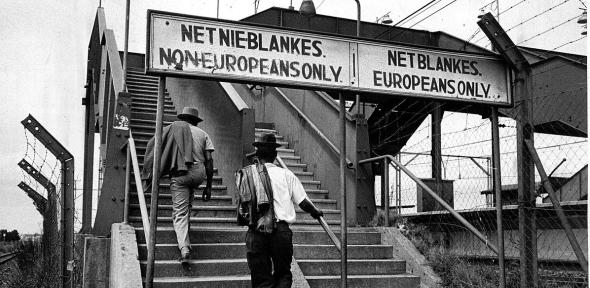
‘Anti-Blackness’ refers to a pervasive and deeply entrenched form of dehumanisation and exclusion targeting people racialised as ‘Black’, particularly those of African, Afro-diasporic, and...
Dance is a socially embedded, sensorially rich, and politically charged practice that transcends mere aesthetics. It can serve to tell stories and transmit knowledge within and across...
People’s daily lives have always relied heavily on their link with outer space. From using the constellations for navigation millennia ago to connecting with thousands of satellites that...
Atmospheres are the overall feeling of a situation that people experience individually and collectively. They are created by the affective relationships between the human and non-human...
Technology broadly refers to objects or actions that are linked to tekhne , an ancient Greek term for ‘skill’ or ‘craftmanship’. Anthropologists of technology sometimes employ this...
Time, from an anthropological perspective, is culturally specific and inseparable from our understanding of the world and our place in it. Anthropology charts how and to what extent time is...
Populism is a conception of political representation that views ‘the people’ as the primary political actor and the basis of political sovereignty. As populism does not refer to a specific...
Affect refers to sensations and physiological shifts in intensity that may or may not formalise into conceptually distinct and collectively recognized feelings. Compared to emotions, which...
Dreams are commonly defined as involuntary, sporadic events that occur to individuals during their sleep and that encompass visual images, cognitive activity, as well as a range of emotions...
Anthropologists have shown an interest in architecture since at least the end of the nineteenth century, though not to the extent that may be expected given the prominent position that...
Racism is premised on the idea that humanity could and should be divided into distinct biological groups or ‘races’, and that different races stand in a ranked and hierarchical relation to...
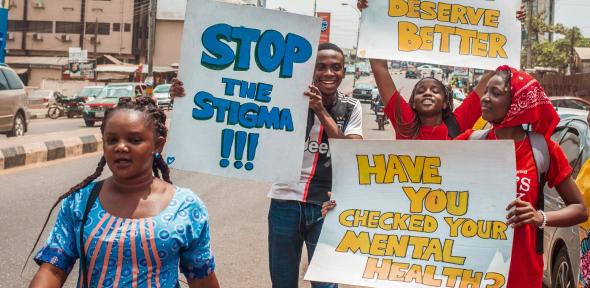
When we talk about mental health, we could seem to be talking about some self-evident reality. However, the very notion of mental health can be seen to both assume and require a specific...
Infrastructures are the arteries of our contemporary world: roads, railways, airports, ports, pipelines, fibre optics cables, data, and logistics centres. Built above and below ground, they...
Silence is a common occurrence in everyday social interactions, yet anthropological research, like most research in the social sciences and humanities, has mostly focused on what people say...
‘Intellectual disability’ is a widely used psychiatric category that conceives of certain minds as impaired in their development. By approaching intellectual disability from a cross-cultural...
Human beings have never encountered as many photographs as we do today. They surround us in public spaces, and populate the numerous screens we access in our daily lives. Anthropologists are...
The definition of ‘art’ is extremely complicated. Its meaning has shifted radically, in particular in the last century. Originally, in Latin, it meant ‘craft’, but then for the last few...
The social and intellectual movement known as transhumanism questions the figure of the ‘human’ at the centre of humanism and modern political formations. As part of a broader ‘posthuman...
‘Prefigurative politics’ refers to how activists embody and enact, within their activism, the socialities and practices they foster for broader society. Inspired by anarchist principles, the...
Literacy is a linguistic innovation characterised by the encoding and decoding of language into a system of visual signs whose relevance to daily life in most societies cannot be overstated...
Anthropology and history are inseparable, sharing concerns with societies other than the one we currently inhabit—whether in time or in space. This entry considers how the relation between...
Monsters are not only key protagonists in myths, legends, fairy tales, fiction, and films; they also haunt cellars, cyberspace, and crossroads. Based on encounters with monsters in their...
Social reproduction is a lens through which to analyse the persistence of society over time, even as its human and material components keep changing. Its main value is in identifying and...
Phenomenology is one of the most influential philosophical traditions of the twentieth century and has significantly shaped contemporary anthropological and social theory. This entry shows...
Free speech is a familiar concept. It is an established ideal of liberalism and democratic politics, and the subject of political debate and conflict across diverse historical and cultural...
Visual anthropology encompasses two parallel aims: the production of anthropological media (including ethnographic film, video, photography, drawing, interactive media, etc.) as well as the...
Medical pluralism describes the availability of different medical approaches, treatments, and institutions that people can use while pursuing health: for example, combining biomedicine with...
Cannibalism, the eating of one’s own kind, is a practice that occurs in both humans and non-humans. Some people consumed their own kin to ensure that their spirits joined those of their...
Writing is key in anthropology, as one of its main modes of communication. Teaching, research, publications, and outreach all build on, or consist of, writing. This entry traces how...
The emic/etic distinction originated in linguistics in the 1950s to designate two complementary standpoints for the analysis of human language and behaviour. It has been subject to debates...
Numbers, enumeration, and the quantification of contemporary life seem to govern our existence more and more. Particularly since the dawn of the twenty-first century, the importance of...
Political ecology is a critical research field within anthropology and related disciplines that examines how and why economic structures and power relations drive environmental change in an...
As one of the oldest forms of social actions that bind people together and as an arresting example of the universality and diversity of humanity, gift exchange has long been a focus of...
Children, as the youngest members of our species, exist in all human societies across space and time. But societies differ widely in their understandings of childhood as a distinctive stage...
Attempts to define and describe magic must reckon with this concept’s slipperiness, as magic is often understood against what supposedly it is not: typically, ‘proper’ religion and ‘rational...
Revolutions encompass political mobilizations that attempt rapid transformations of both the nature of political authority and wider social, political, and economic structures. Although...
Animism is a particular sensibility and way of relating to various beings in the world. It involves attributing sentience to other beings that may include persons, animals, plants, spirits...
Though there is no universally accepted definition for what constitutes a ‘game’, games are typically defined as goal-oriented, rules-based activities closely associated with the notion of...
Divination is a widespread cultural practice that takes varied forms worldwide. It can be diagnostic, forecasting, and interventionist, in the sense of changing the receptor’s destiny. The...
‘The Anthropocene’ is a term that is increasingly used to define a new planetary epoch: one in which humans have become the dominant force shaping Earth’s bio-geophysical composition and...
‘The digital’ is defined here as new technologies that are ultimately reducible to binary code. These have made many cultural artefacts easier and quicker to both reproduce and to share. The...
To make a topic from one of anthropology’s principal means and objects of study, investigating relations through relations, is offered in the spirit of reflexive enquiry. The entry is not...
What role do nonhuman animals play in human social life? This question has long interested anthropologists, who have provided various answers, themselves reflective of broader theoretical...
Ethnographic fieldwork, carried out according to the method of long-term participant-observation, is what defines social anthropology. The method is inductive and open-ended. As such, the...
This entry takes on two subjects. First, it addresses the influence that anthropology had on the work of the mid-twentieth century French philosopher Gilles Deleuze, and second, the...
Tourism is a new phenomenon in world history, but today more people travel long distances for this purpose than for any other. This entry traces some main contributions anthropologists have...
Voice is a salient category in our contemporary lives. We speak of marginalised groups ‘lacking voice’ and celebrate their efforts at ‘raising their voices’; we are advised to listen to our...
‘Culture’ is in many ways the most fundamental of anthropological concepts. Yet it has been the subject of a range of critical interventions in the course of the discipline’s history, the...
It is possible to argue that the anthropology of ethics has always been part of the discipline but also that it is a radically new and transformative venture. This entry explains why both...
'Science' features twice in anthropology. On the one hand, science is an object of anthropological enquiry, in much the same way as ‘kinship’, ‘religion’, or ‘nationalism’. Anthropologists...
What is citizenship? The word itself is now used in a wide range of arenas, from citizenship education in schools to development agencies’ programmes of good governance, and public...
Human rights, as described in documents such as the Universal Declaration of Human Rights, are a set of moral and legal principles that apply to all human beings irrespective of their age...
The Mediterranean is one of the most underrated areas in anthropological imagination. On the one hand, its shores have furnished the most complex formulations of the unfolding dynamics of...
When we think about landscape, we tend to think of natural scenery, empty of people; of a view, spread in front of our eyes; or of a backdrop, a stage for people’s movements and activities...
Matriliny is a way of reckoning kinship descent and belonging through the female line. This entry discusses some of the forms matrilineal kinship may take in practice before considering how...
The concept of values has recently re-emerged as the object of explicit theoretical attention in a number of disciplines, including anthropology. The aim of this entry is to review the...
Top
top